
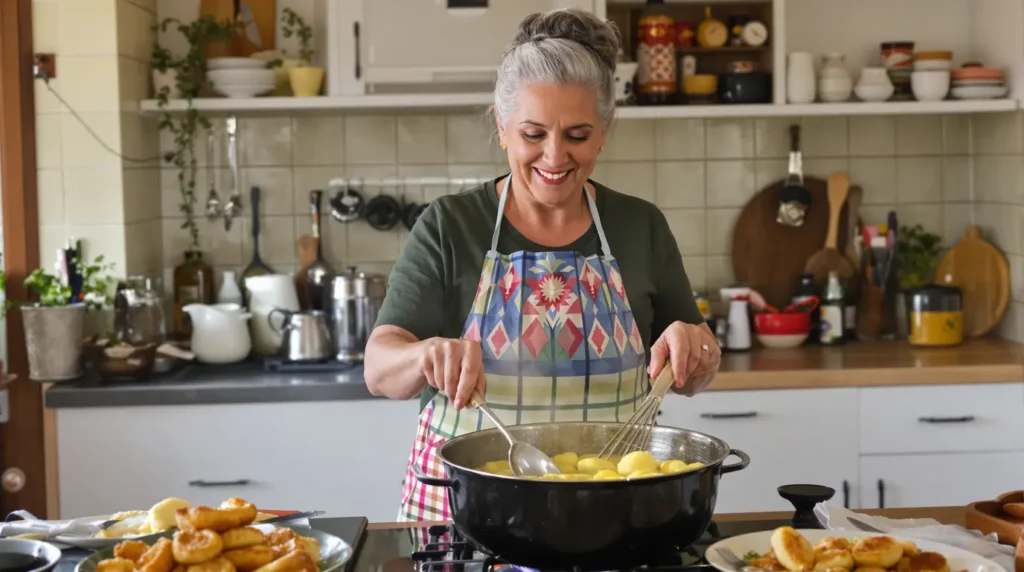
A Sweet Scent of Frying
The kitchen comes alive with the delightful aroma of frying, evoking memories of childhood afternoons filled with laughter and flour-dusted hands. In Alsace, the carnival beignets are a cherished tradition, reminiscent of simpler times. Here’s a classic recipe from an Alsatian grandmother that yields golden, fluffy treats with a slightly crispy exterior.
Ingredients for Approximately 20 Beignets
- 500 g all-purpose flour (Type T45 or T55)
- 3 medium eggs
- 60 g granulated sugar
- 80 g melted, slightly cooled butter
- 1 packet baking powder (≈ 11 g)
- A pinch of salt
- 30 to 60 ml milk or, for an authentic touch, 2 to 4 tablespoons of fruit brandy (kirsch or quetsche)
- 1 liter neutral frying oil (sunflower or peanut)
- Powdered sugar for dusting
Grandmother’s Tip: For a sweeter aroma, add a packet of vanilla sugar. If you prefer a lighter dough, substitute some of the milk with water.
Step-by-Step Preparation
In a large mixing bowl, combine the flour, baking powder, sugar, and salt. Add the eggs and melted butter. Gradually incorporate the milk or fruit brandy, ensuring the dough remains soft and pulls away from the sides of the bowl.
Knead the dough by hand for 5 to 8 minutes until it becomes elastic. Shape it into a ball, cover with a cloth, and let it rest for 30 minutes at room temperature.
Lightly flour your work surface. Roll out the dough to about 8 mm to 1 cm thick. The thinner you roll it, the lighter the beignets will be. For the classic shape, cut out diamonds approximately 6 x 4 cm. For schankala, cut strips and roll them into small logs.
Place the cut pieces on a floured cloth. Heat the oil to 170-180 °C. If you don’t have a thermometer, drop a small piece of dough into the oil; it should rise quickly and bubble.
Fry a few beignets at a time, allowing them to brown for 1 to 2 minutes on each side. Turn them as they develop a lovely golden color. Drain on paper towels and dust with powdered sugar while still warm.
Secrets for Perfect Texture
- Respect the resting time; this allows the gluten to relax, making the dough more pliable.
- Avoid overworking the dough after rolling it out to prevent it from retracting.
- Choose a stable, neutral oil that doesn’t smoke.
- Don’t overcrowd the frying pot; each beignet needs space to puff up.
Frying: Temperature and Precautions
The ideal frying temperature is 170-180 °C. If the oil is too cold, the beignets will absorb grease; if too hot, they will burn on the outside and remain raw inside. Monitor the heat and adjust as needed between batches. Use a slotted spoon to remove the beignets, allowing them to drain without stacking. Let them cool for a few minutes before dusting with sugar to keep the coating intact.
How to Serve and Store
Traditionally, these beignets are enjoyed warm, often accompanied by a hot soup. They also make a delightful snack with hot chocolate or coffee. For a more regional flavor, serve with warm apple compote.
Storage: Allow the beignets to cool completely. Store them in an airtight or metal container, where they’ll keep for 1 to 2 days at room temperature. To revive their crispness, warm them briefly in a low oven.
Variations and Alsatian Touches
- Add 1 tablespoon of kirsch or quetsche brandy for a distinctive flavor.
- Incorporate lemon zest for a refreshing hint.
- Dust with powdered sugar mixed with a touch of cinnamon for a gourmet twist.
- Experiment with shapes: diamonds, circles, or small logs (schankala).
These carnival beignets are more than just a pastry; they tell the story of a region, shared evenings, and hands learning to knead the dough. Take your time, invite someone to join you, and let the kitchen become a space of memories. Try this recipe this weekend, and you may just rediscover the flavors of your childhood.
